Noise-Cancelling Headphones: Benefits, Drawbacks, and Buying Tips
Cut the roar and focus better. Learn how noise-cancelling headphones work, their real-world pros and cons, and smart tips to pick the right pair.
Understanding How ANC Works: Noise-cancelling headphones blend passive isolation with active noise cancellation (ANC) to reduce distractions. Tiny microphones on the ear cups or earbuds capture external sound, and digital signal processing (DSP) generates an anti-phase signal that interferes with the noise before it reaches your eardrum. This technique excels at steady, low-frequency rumbles—think ventilation, engine drones, or train vibrations—but is less effective against sudden, high-frequency sounds like keyboard clicks and lively conversation. Design matters: over-ear models create a physical seal around the ear, while in-ear options rely on ear tips to block sound at the canal. Some systems are feedforward, listening outside; others are feedback, sampling inside the cup; hybrid designs use both. Modern sets add transparency (ambient) modes, intentionally piping in outside audio so you can stay aware. The quality of the seal, the shape of your ear, and even glasses arms influence performance, which is why proper fit and positioning are as important as the electronics inside.
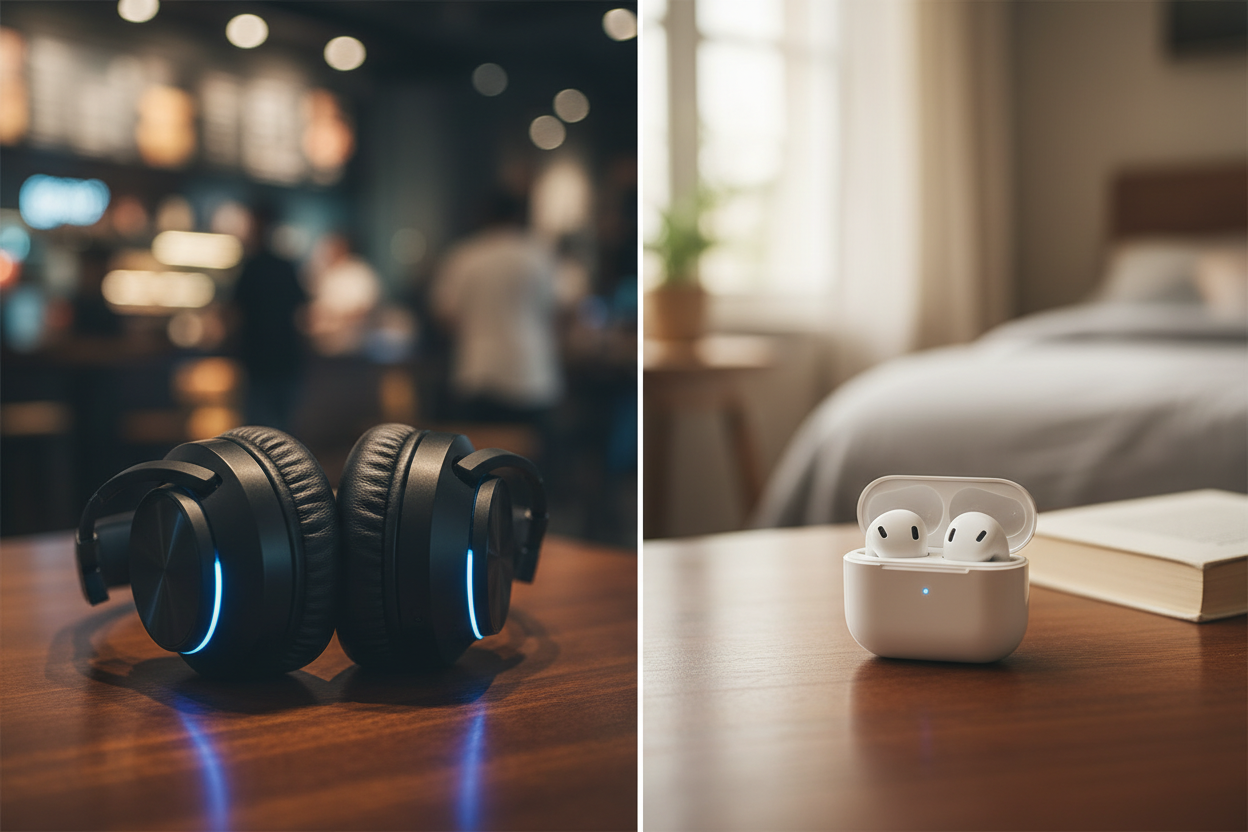
Benefits for Work, Travel, and Wellness: The big win is focus. By lowering background noise, ANC helps you concentrate in open offices, busy homes, or shared study spaces without blasting volume. Reducing auditory clutter also eases listening fatigue, making long sessions more comfortable. Because you can keep volume lower, ANC can support hearing health compared with constantly turning music up to overpower noise. Travelers appreciate calmer cabins and clearer podcasts and audiobooks, while commuters gain relief from subway rumble or traffic hum. Many headsets pair ANC with beamforming microphones and noise reduction for calls, improving speech clarity on video meetings and phone chats. For relaxation, a quiet soundstage helps reveal detail in music and makes ambient playlists or white noise more soothing. When you need awareness, transparency mode mixes in surroundings, handy for announcements or quick conversations. Overall, the combination of comfort, lower volume, and clearer audio can improve productivity, enjoyment, and everyday peace of mind.
Drawbacks and Trade-offs: ANC is powerful, but it is not magic. Some listeners feel a slight ear pressure sensation from low-frequency cancellation, which can cause fatigue over long sessions. The process may subtly alter sound signature, affecting bass tightness or treble sparkle, especially with aggressive algorithms. Outdoor wind noise can trigger microphones and create a rumble; good designs mitigate it, but fit and positioning still matter. Relying on circuitry means battery life becomes critical, and performance drops when power runs low. Wireless models also introduce latency, which can desync audio in fast-paced gaming unless a low-latency mode or cable is used. Safety matters: strong isolation can reduce situational awareness, so use transparency or pause playback near traffic and at crosswalks. There is also the price factor—effective ANC and quality materials usually cost more—and some models have limited repairability, making ear pads or ear tips the primary user-replaceable parts. Finally, ANC is less effective against irregular, high-frequency chatter, so expectations should be realistic.
Smart Buying Tips and Key Features: Start with fit and comfort. Over-ear designs offer spacious sound and stronger passive block, while in-ear designs are compact and travel friendly; either way, a secure seal is non-negotiable. Test for clamp force, weight balance, and breathability. Evaluate ANC adjustability and transparency modes; adjustable sliders or profiles let you tune for office, commute, or café. Check microphone quality for calls, including sidetone so you hear your own voice naturally. For wireless use, look for codec support that matches your devices, Bluetooth multipoint for seamless switching, and optional wired playback for zero-latency scenarios. Practical perks include dependable battery life, quick USB-C charging, intuitive controls, robust hinges, and a protective case. An app with EQ and customization extends longevity by letting you refine the sound as tastes evolve. If possible, audition with varied noise—HVAC hum, street noise, soft music—and try different ear tips. Favor brands that offer firmware updates, accessible spares (pads, tips), and clear warranty support.
Getting the Most from Your Headphones: Proper use multiplies value. Begin by experimenting with fit, rotating ear cups slightly or swapping ear tip sizes until the seal is snug without hot spots. Use EQ sparingly to correct minor tonal quirks rather than overhauling the signature. Switch between ANC and transparency based on context: full ANC for steady noise, a lighter setting for offices, and transparency outdoors for safety. Preserve battery health with moderate charge habits and avoid extreme heat or cold; store in a case to protect joints and cushions. Keep ear pads and tips clean, replacing them when the seal loosens to maintain isolation and bass response. Apply firmware updates for stability and new features, and test low-latency modes for video and gaming. Mind listening levels—quieter backgrounds invite safe volumes—so your hearing stays fresh for years to come. With thoughtful setup, maintenance, and situational awareness, your ANC headphones will remain a reliable, comforting companion across work, travel, and downtime.