Declutter Your Space, Clear Your Mind: A Room-by-Room Guide
Transform every room with simple, sustainable decluttering steps to reduce stress, boost focus, and create a home that supports your best life.
Entryway: Set the Tone
Your entryway sets the emotional temperature of your home, so make it a checkpoint where clutter stops before it spreads. Start by defining zones for shoes, bags, keys, and incoming mail. Mount sturdy hooks at reachable heights, add a narrow console or small shelf for essentials, and use a shallow tray to corral pocket items. A closed basket for shoes keeps floors clear, while a compact bench encourages the habit of removing footwear right away. Keep a discreet donation bag by the door to drop items you no longer need as you notice them. Sort mail immediately into action and recycle, preventing piles from migrating to other rooms. Leverage vertical storage with slim wall racks for umbrellas, dog leashes, and sunglasses. Finish with a simple reset routine: a one-minute sweep when you come home and another when you head out. By pairing function with flow, your threshold becomes a calm, clutter-resistant launchpad.
Kitchen: Streamline for Function and Flow
A tidy kitchen reduces decision fatigue and speeds up every task from breakfast to cleanup. First, clear counters so only daily-use tools remain, like a cutting board, kettle, or coffee maker. Create clear zones for prep, cooking, serving, and storage, then relocate items accordingly: knives near the board, oils near the stove, dishes near the table. Audit utensils and pare down duplicates; one reliable whisk beats three flimsy ones. Use drawer dividers for tools, lazy Susans in corners, and bins in the pantry to group snacks, grains, and baking supplies. Decant staples into airtight containers and add simple labels so inventory checks are effortless. Put heavy items low, light items high, and keep kid-friendly snacks within reach to reduce rummaging. Adopt a quick five-minute reset after meals: wipe surfaces, wash or load dishes, clear hot spots, and return everything to its zone. Organized flow turns cooking into a smoother, more mindful ritual.
Living Room: Curate Comfort Without Clutter
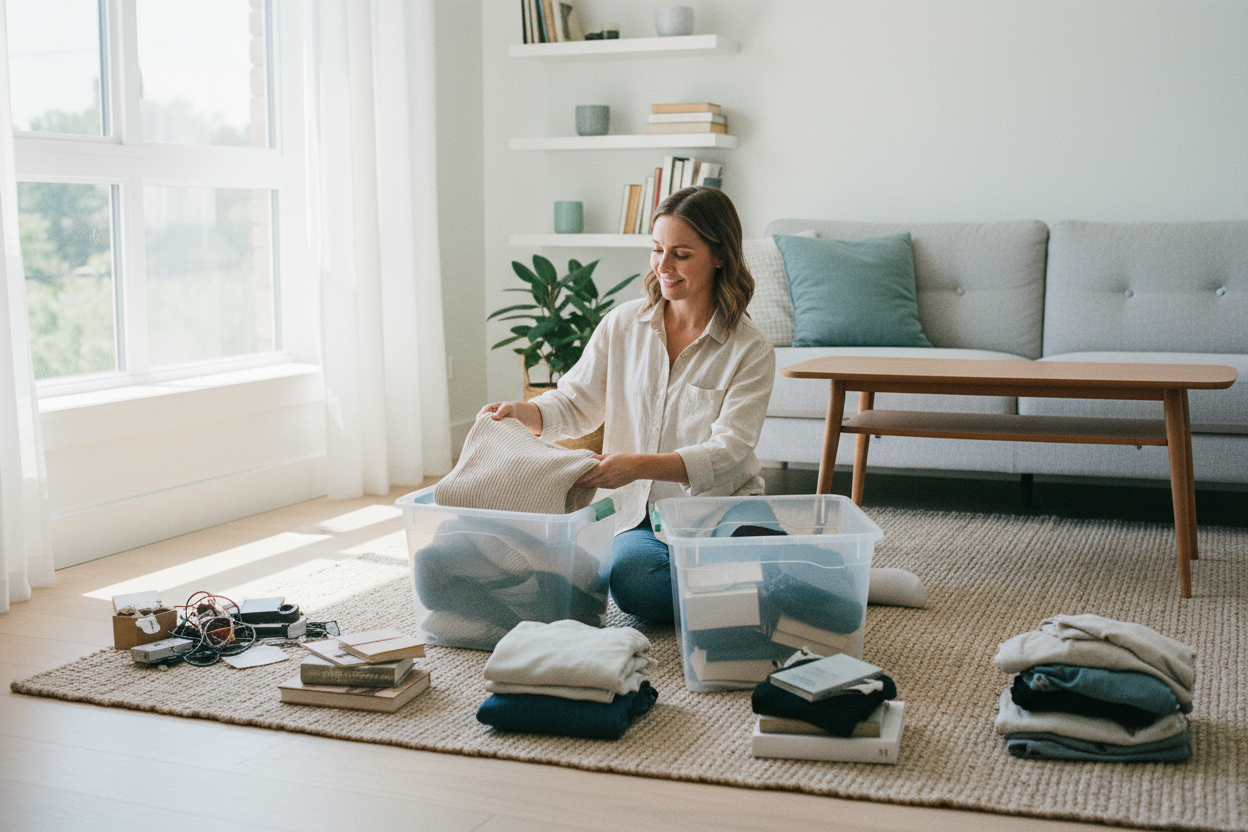
In the living room, visual noise competes with relaxation. Start by editing surfaces: use a tray on the coffee table to cluster remotes, coasters, and a candle, creating a single focal point instead of scattered bits. Tame cables with clips, sleeves, and a discreet charging station tucked into a drawer or cabinet. Choose closed storage for games, blankets, and kid or pet gear, and add breathable baskets for quick toss-and-stash moments during visits. Curate shelves with the rule of thirds: mix books, objects, and negative space so the eye can rest. Apply one-in-one-out for decor and magazines to prevent overflow. Rotate throw blankets and pillows seasonally for freshness without hoarding. Establish a daily 10-minute tidy, returning items to designated homes and fluffing cushions for an instant lift. Keep a lightweight vacuum or lint roller nearby for rapid resets. Calm, intentional curation lets comfort lead while keeping everyday life beautifully contained.
Bedroom and Closet: Edit to Rest Better
Your bedroom is a sanctuary, and clutter crowds sleep. Begin with the closet: build a pragmatic, personal capsule by evaluating fit, comfort, and frequency of wear. Group pieces by category, then by color for instant visual clarity. Use matching hangers to reduce visual clutter and encourage spacing; fold knits into drawers using upright file folds so you can see everything at a glance. Contain accessories with small trays or divided boxes, and store rarely used items in labeled under-bed bins. Keep nightstands minimal: a lamp, book, water, and one meaningful object. Set a standing donation box inside the closet for quick edits as you dress. Create a brief evening reset to return clothes, clear surfaces, and lay out tomorrow's essentials. Fresh bedding and an easy laundry flow reduce friction. By removing friction points and simplifying choices, you transform the room from a storage area into a truly restorative retreat.
Bathroom: Simplify Surfaces and Systems
A cluttered bathroom can slow mornings and complicate self-care. Start with a product audit: discard empties, combine duplicates, and keep only what you actually use. Group items into clear categories such as daily care, weekly treatments, and first aid, then assign each to a labeled bin or drawer insert. Use vertical shelving, over-the-door racks, or magnetic strips for small tools to free up vanity space. In the shower, reduce bottles to essentials and place them in a caddy for quick cleaning. Keep a small towel set per person and launder on rotation to avoid overstock. Adopt a 60-second after-use reset: wipe mirrors, swish the sink, and clear surfaces so the room stays guest-ready. Maintain a slim backup inventory for toiletries to prevent last-minute runs without hoarding. With clear zones and simple maintenance, the bathroom becomes a light, efficient, and hygienic space that supports daily routines.
Home Office: Design for Clarity and Deep Work
A focused home office begins with paper control. Create three trays: inbox, action, and archive. Process daily, scanning what needs digital storage and shredding the rest. Use concise naming conventions for files to make retrieval frictionless. Keep your desktop clear, limiting it to a laptop or monitor, a notebook, and a pen caddy; store extras in a nearby drawer or rolling cart. Tame cords with a cable box and labeled ties. Set up a weekly review to pay bills, reconcile notes, and schedule priorities. Corral office supplies into categories and right-size each container so extras do not creep in. Add a small whiteboard or pad for quick capture, reducing sticky-note scatter. Close the day with a shutdown ritual: clear the desk, plan tomorrow's top three tasks, and power down. This consistent, systematic approach keeps distractions low, elevates focus, and turns your workspace into a reliable engine for deep, meaningful work.