Brushless vs Brushed: Choosing the Right Motor for Your Project
Compare brushless vs brushed motors by efficiency, cost, control, and durability. Learn when each shines and how to size and select for your project.
Core Differences: A brushed motor uses mechanical brushes and a commutator to switch current in the rotor windings, while a brushless motor relies on electronic commutation that drives stationary windings with permanent magnets on the rotor. This design shift removes friction from brushes, reducing heat, electrical noise, and wear, and it usually raises efficiency and power density. Brushed units shine for simplicity: two wires, easy reversal, and a low-cost controller, which is ideal for quick prototypes, hobby mechanisms, and basic actuators. Brushless units require an ESC or driver but reward you with smoother torque, better speed control, and longer service intervals. Mechanical arcing in brushed systems can introduce interference and dust; brushless systems avoid that but add firmware, tuning, and wiring complexity. Your choice hinges on priorities: immediate simplicity and upfront savings favor brushed, while performance, longevity, and energy use favor brushless. Understanding this foundational tradeoff helps frame every later decision about size, voltage, duty cycle, and control.
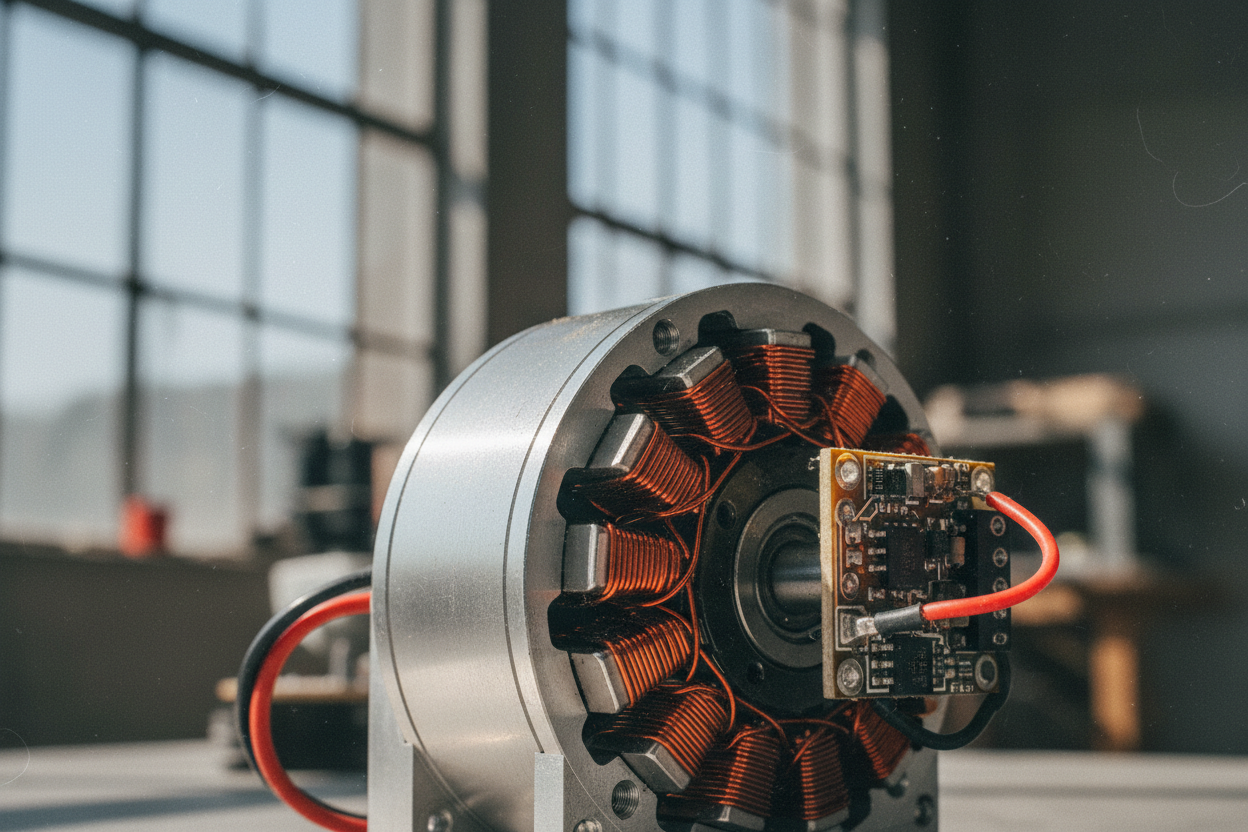
Power, Efficiency, and Performance: If power density and sustained efficiency top your list, a brushless motor is often the strongest candidate. Electronic commutation holds copper losses and torque ripple in check, delivering smoother acceleration and better partial-load behavior. In battery-powered builds, that can translate into longer runtime and smaller packs. Brushless designs also manage thermal budgets more gracefully under continuous duty, with less wasted heat and more consistent torque at speed. A brushed motor still excels in straightforward high-stall or intermittent tasks where bursts of torque matter more than continuous efficiency, such as simple winches or low-duty actuators. Keep in mind the torque-speed curve: brushed motors provide intuitive control via voltage and current, while brushless systems use an ESC to maintain speed under load, offering finer closed-loop stability. For applications requiring fast step response, repeatable positioning, or high RPM, brushless usually wins; for quick, rugged power on a budget, brushed remains practical.
Control, Electronics, and Complexity: With a brushed setup, control is minimal: two leads, polarity reversal for direction, and PWM for speed. That simplicity speeds prototyping and reduces the bill of materials. Brushless requires an ESC matched to motor Kv or Kt, current limits, and supply voltage, plus attention to sensorless versus sensored operation. Sensorless controllers use back-EMF detection and can cog at low speed; sensored variants add Hall sensors for smooth startups and precise low-speed torque. Advanced ESCs implement FOC (field-oriented control) to minimize noise and maximize efficiency, at the cost of configuration and tuning. You will plan for connector standards, current paths, and EMI mitigation regardless of motor type, but brushless systems place more emphasis on firmware parameters such as acceleration ramps, current limits, and regenerative behaviors. The trade is clear: brushed offers plug-and-play control, while brushless provides richer feedback, tighter speed regulation, and deeper integration with your overall control architecture.
Durability, Noise, and Maintenance: A brushed motor gradually wears its brushes and commutator, producing dust and requiring periodic service. Under heavy load, arcing can add electrical noise and accelerate degradation. Bearings still matter in both types, but brushless eliminates brush wear, reducing routine maintenance and improving lifespan. In environments with dust, moisture, or continuous cycling, the lower internal friction of brushless helps with reliability and thermal stability. Acoustic profile also differs: brushed units can buzz due to commutation, while brushless, especially with FOC, offers notably smoother and quieter operation with less torque ripple. From a safety standpoint, fewer sparks and lower heat at the commutator make brushless friendlier near sensitive electronics or materials. However, a rugged, sealed brushed motor can still be extremely durable for short-duty tasks. Evaluate vibration, cooling, ingress protection, and service intervals honestly; downtime and hard-to-reach mounting locations can outweigh initial hardware savings.
Cost, Sizing, and Choosing for Your Project: Budget is more than sticker price. A brushed motor can minimize upfront cost and simplify wiring, enclosures, and time-to-prototype. A brushless motor adds an ESC, potential sensors, and configuration time, but yields lower energy cost, smaller thermal solutions, and longer service life. When sizing, consider torque, speed, voltage, continuous and peak current, duty cycle, and available cooling. Check shaft size, mounting pattern, and envelope constraints; remember that high power density in brushless units may reduce overall mass and space. Decision shortcuts help: choose brushed for quick, low-cost builds, short intermittent runs, and tolerant noise profiles. Choose brushless for high utilization, long runtime per charge, precise control, and minimal maintenance. Ask key questions: How quiet must it be? How long must it run continuously? How stable should speed be under varying loads? Your answers will guide a confident selection for any motors project.