AC vs DC Motors: What's the Difference and Why It Matters
AC and DC motors differ in power source, control, efficiency, and upkeep. Learn how these trade-offs affect performance, cost, and reliability.
Foundations at a Glance
Understanding AC motors and DC motors starts with the nature of the electrical supply. Alternating current (AC) reverses direction in a periodic pattern, while direct current (DC) flows one way. In the category of motors, that difference shapes how torque is created, how speed is set, and what supporting electronics are needed. AC motors commonly take advantage of grid power and use frequency to define synchronous speed, whereas DC motors rely on voltage and commutation to establish rotation and control. Energy conversion hinges on interacting magnetic fields inside the stator and rotor, but the way those fields are produced and timed varies. DC machines often use brushes and a commutator or rely on electronic commutation, while AC machines depend on induced currents or synchronized fields. In practice, AC setups might need a variable frequency drive (VFD) for precise control, and DC systems might require a rectifier or battery. These fundamentals influence performance, cost, and application fit.
How They Work
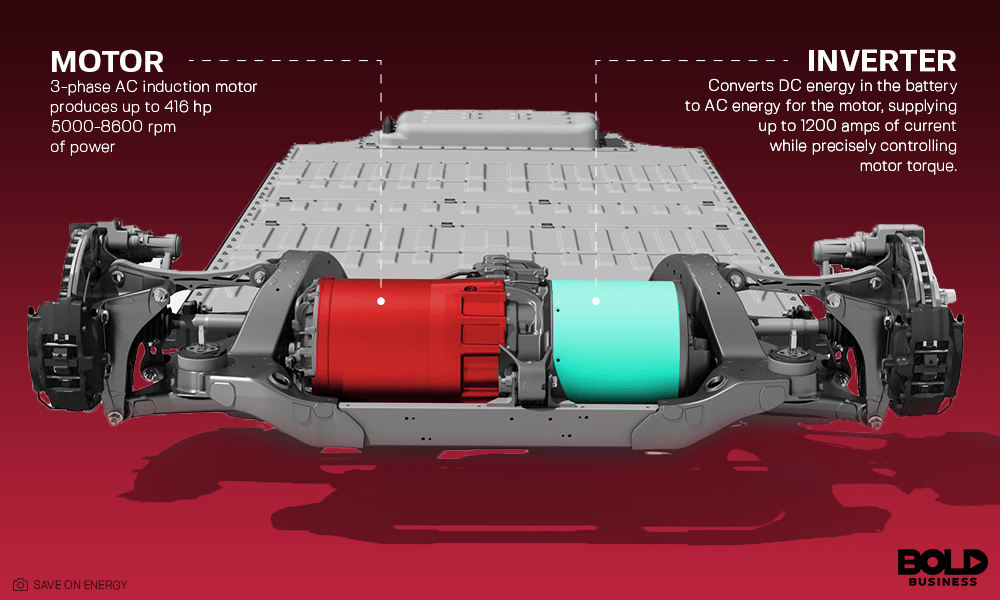
AC motors typically come in two families: induction and synchronous. In an induction motor, the stator's rotating magnetic field induces current in the rotor, creating torque with a small slip between electrical and mechanical speeds. Synchronous motors lock the rotor to the rotating field, using permanent magnets or excitation to maintain alignment, which yields tight speed accuracy. DC motors are either brushed or brushless. Brushed DC uses mechanical brushes and a commutator to switch current in the rotor windings, delivering straightforward control and strong low-speed torque. Brushless DC (BLDC) moves windings to the stator and replaces brushes with electronic commutation, often guided by Hall sensors or back-EMF detection, coordinated by PWM control. The result is higher reliability and efficiency compared to brushed designs. Across all types, torque arises from the interaction of magnetic fields, but the timing mechanism—mechanical or electronic—defines complexity, maintenance demands, and control finesse.
Performance and Control
Performance differs in speed–torque characteristics, efficiency, and controllability. DC motors generally offer excellent low-speed torque and smooth start-up, with speed controlled by voltage and torque by current. BLDC systems add precise, low-loss PWM control and rapid dynamic response. AC induction motors excel in ruggedness and efficiency at nominal operating points; speed is tied to frequency, so VFDs modulate frequency and voltage for control, delivering soft starts, adjustable speed, and energy savings under variable loads. Synchronous AC provides exact speed tracking and high efficiency, especially with permanent magnet rotors, but requires capable drives. Consider torque ripple, harmonic distortion, and power factor: DC controllers can introduce ripple, while AC drives manage harmonics and improve power factor with modern control algorithms. Thermal behavior also matters—losses generate heat, impacting duty cycle and lifetime. For precision positioning, servo implementations exist in both realms, using feedback to command torque and velocity with tight accuracy.
Durability, Maintenance, and Cost
Durability stems from mechanical simplicity and thermal robustness. AC induction motors have no brushes, making them inherently low-maintenance, with primary wear in bearings and insulation. Synchronous AC and BLDC share this advantage by eliminating brush wear, though they require reliable electronics for commutation. Brushed DC motors are economical and easy to control but need periodic brush and commutator service, which adds downtime in high-duty applications. Environment plays a role: dust, moisture, and vibration challenge seals, cooling paths, and insulation systems, so proper enclosures, ingress protection, and thermal management are critical. Cost-wise, a basic induction motor is often the most affordable hardware, with expense shifting to the VFD when variable speed is needed. BLDC systems flip the equation: the motor and controller are integrated in cost and design, but the package offers efficiency and reliability. Evaluating total cost of ownership—energy, maintenance, drives, and lifecycle—usually clarifies the best value.
Use Cases and Selection Criteria
Choosing between AC and DC hinges on supply, control needs, and operating profile. For fixed-speed, grid-connected loads like fans, pumps, and compressors, AC induction shines due to robustness and efficiency. When variable speed is needed, a VFD adds smooth control and energy savings by matching speed to load. For battery-powered systems, compact platforms, or applications demanding high low-speed torque and agile control—think robotics, portable tools, and light electric mobility—BLDC often wins thanks to electronic commutation, strong torque density, and excellent efficiency. Brushed DC remains a pragmatic choice in cost-sensitive, simple-control scenarios. Consider regenerative braking potential, noise limits, thermal constraints, and required precision. Space and weight may favor BLDC or permanent magnet synchronous designs, while harsh environments may favor sealed AC induction units. Align the duty cycle, torque profile, and control resolution with the available power source—grid versus battery—to balance performance and practicality.
Why the Difference Matters
The AC–DC distinction affects energy efficiency, control precision, reliability, and the overall system architecture. Selecting the right motor type can shrink energy bills, extend uptime, and improve user experience through quieter operation and smoother motion. With the rise of intelligent controls, AC motors paired with VFDs deliver scalable efficiency in variable-load systems, and DC—particularly BLDC—enables compact, responsive designs where power and precision per kilogram matter. The choice also influences integration: AC systems fit naturally with grid infrastructure, while DC architectures simplify battery systems and regeneration. Ultimately, success depends on matching the motor's inherent strengths to the application's duty, environment, and controllability demands. By weighing total cost of ownership, maintenance expectations, and growth potential, engineers can create motor solutions that are durable, adaptable, and efficient—ensuring the machine, the drive, and the energy source work together seamlessly for long-term performance in the broad category of motors.